Rosa Meier · 7 October 2026
The Evolution of Cross-Platform Sync Protocols in Note Applications Supporting Remote Knowledge Workers
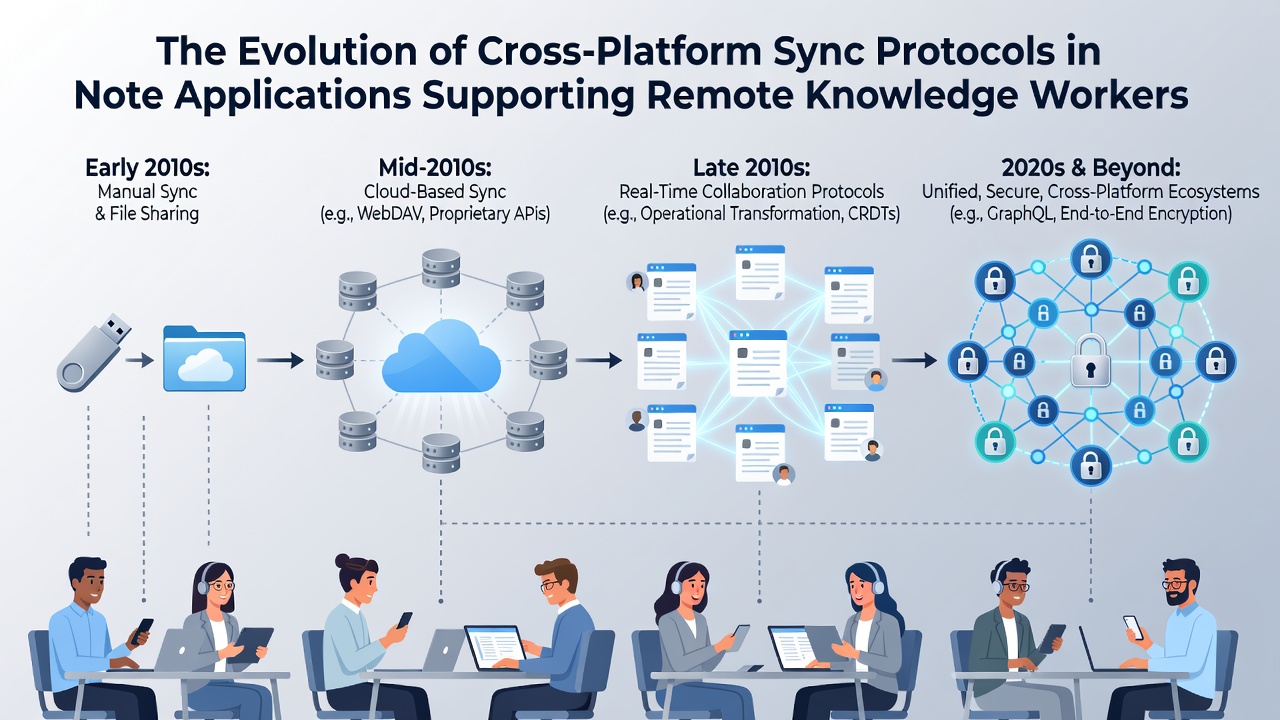
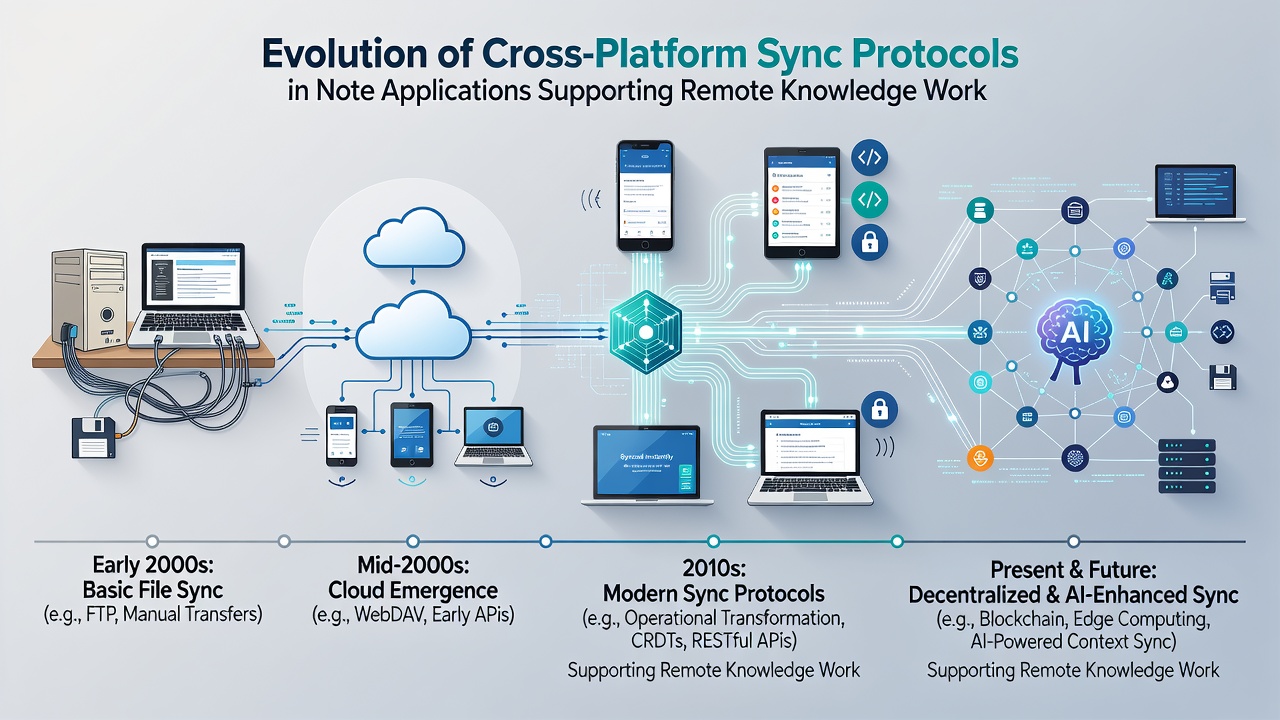
Cross-platform sync protocols in note applications have developed through distinct phases driven by the needs of distributed teams and remote professionals who require consistent access to shared knowledge bases across devices and operating systems. Early implementations relied on basic file transfer methods such as FTP and WebDAV which allowed users to upload and retrieve text files from central servers yet introduced frequent conflicts when multiple workers edited the same document simultaneously.
Initial Synchronization Approaches
Researchers documented the limitations of these server-centric models in the 2000s when remote workers began adopting laptops and mobile devices in greater numbers. Data indicates that simple timestamp-based conflict resolution often resulted in overwritten changes or duplicated entries which disrupted workflows in collaborative environments. Observers note that applications like early versions of Microsoft OneNote and Evernote addressed some issues by introducing proprietary cloud storage layers that performed periodic full-file uploads but these approaches consumed significant bandwidth and struggled with large media attachments common in research notes.
Transition to Real-Time Collaboration
By the mid-2010s operational transformation techniques gained traction in consumer note platforms and provided the foundation for more responsive editing sessions. Studies from academic institutions including the University of Toronto showed that operational transformation could preserve user intent during concurrent edits yet required substantial server-side computation to maintain consistency across platforms. Remote knowledge workers benefited from these improvements when drafting reports or compiling literature reviews because changes appeared almost instantly on connected devices.
Adoption of CRDTs and Decentralized Models
Conflict-free replicated data types emerged as a practical alternative that eliminated the need for a single authoritative server in many cases. Evidence suggests that CRDT implementations allow each device to maintain its own replica while merging updates through mathematical properties that guarantee convergence without manual intervention. Applications supporting remote teams such as those built around Obsidian and Logseq integrated CRDT variants to enable offline-first experiences where workers could continue editing during travel or in low-connectivity regions and then reconcile changes upon reconnection.
According to a report published by the European Commission on digital infrastructure for distributed workforces the adoption of CRDT-based sync reduced latency complaints among knowledge workers by measurable margins in pilot programs conducted across member states. Those programs tracked usage patterns from 2023 through 2025 and recorded improvements in document availability during peak collaboration hours.
Current Developments in October 2026
In October 2026 several note application vendors released protocol updates that combined CRDT structures with selective encryption layers to address data residency requirements in regulated industries. Figures from industry analyses reveal that these hybrid approaches allow organizations to route metadata through global content delivery networks while keeping sensitive note content within specific geographic boundaries. Remote professionals in fields such as legal research and scientific publishing now encounter fewer compliance hurdles when syncing across jurisdictions because the protocols embed policy controls directly into the merge logic.
What's interesting is how these updates also incorporated lightweight discovery mechanisms that let devices locate nearby peers on local networks before falling back to cloud relays. This design choice supports environments where bandwidth costs remain a concern for independent contractors operating across multiple time zones. Data shows continued growth in the number of note applications exposing open sync APIs which enables third-party tools to participate in the same replication graph without requiring custom bridges.
Challenges and Ongoing Refinements
Security considerations continue to shape protocol evolution because cross-platform environments expose additional attack surfaces during the merge process. Research indicates that developers have responded by embedding verifiable append-only logs that allow clients to audit the history of changes even when some replicas operate offline for extended periods. Those who've studied these systems observe that such logs also facilitate compliance audits required by organizations handling intellectual property across borders.
Interoperability between competing note platforms remains an active area of work. Although proprietary extensions still exist many vendors participate in working groups that define common CRDT schemas for basic text and attachment types. This collaboration reduces friction for remote knowledge workers who switch between tools depending on project requirements or team preferences.
Conclusion
The trajectory of cross-platform sync protocols reflects sustained demand from distributed professionals who treat note applications as primary workspaces. Continued refinement of CRDT techniques alongside encryption and discovery features positions these systems to handle increasing volumes of collaborative content while maintaining consistency across diverse device ecosystems. Future iterations will likely emphasize energy-efficient merge operations and tighter integration with identity frameworks used by enterprise remote teams.