Logan Franke · 21 October 2026
Shifting Paradigms in Knowledge Management Software for Independent Content Creators
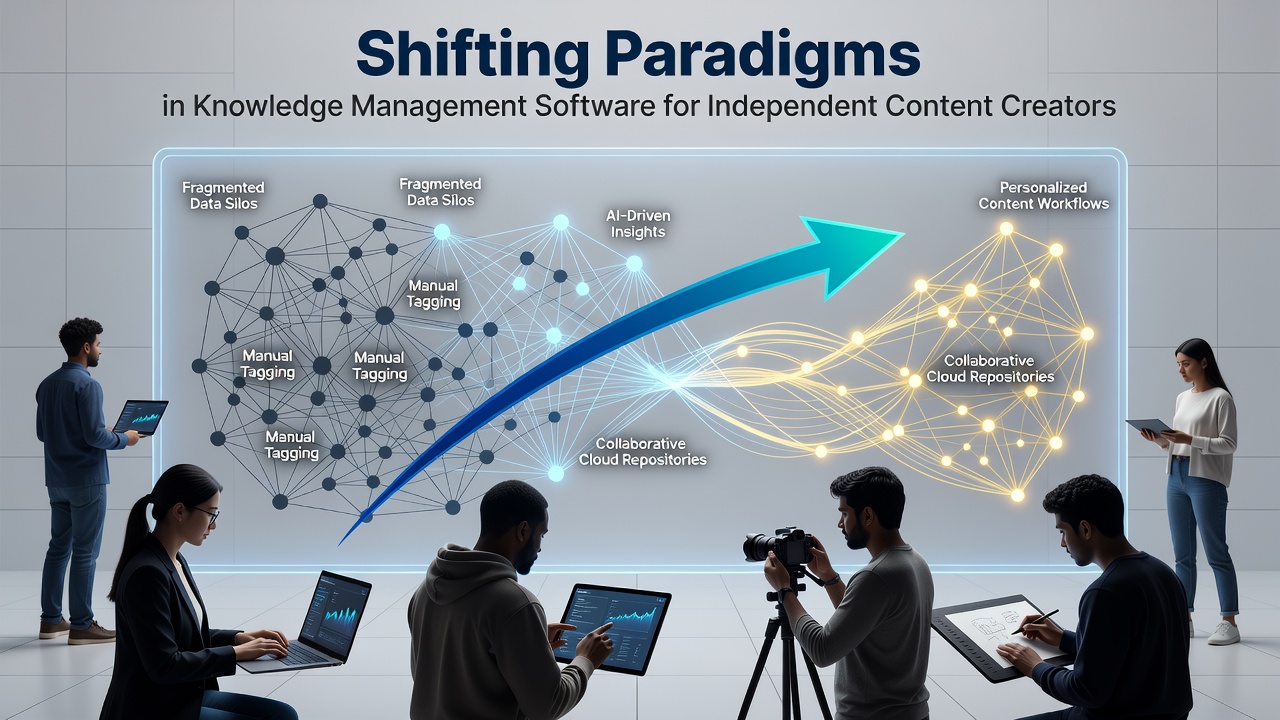
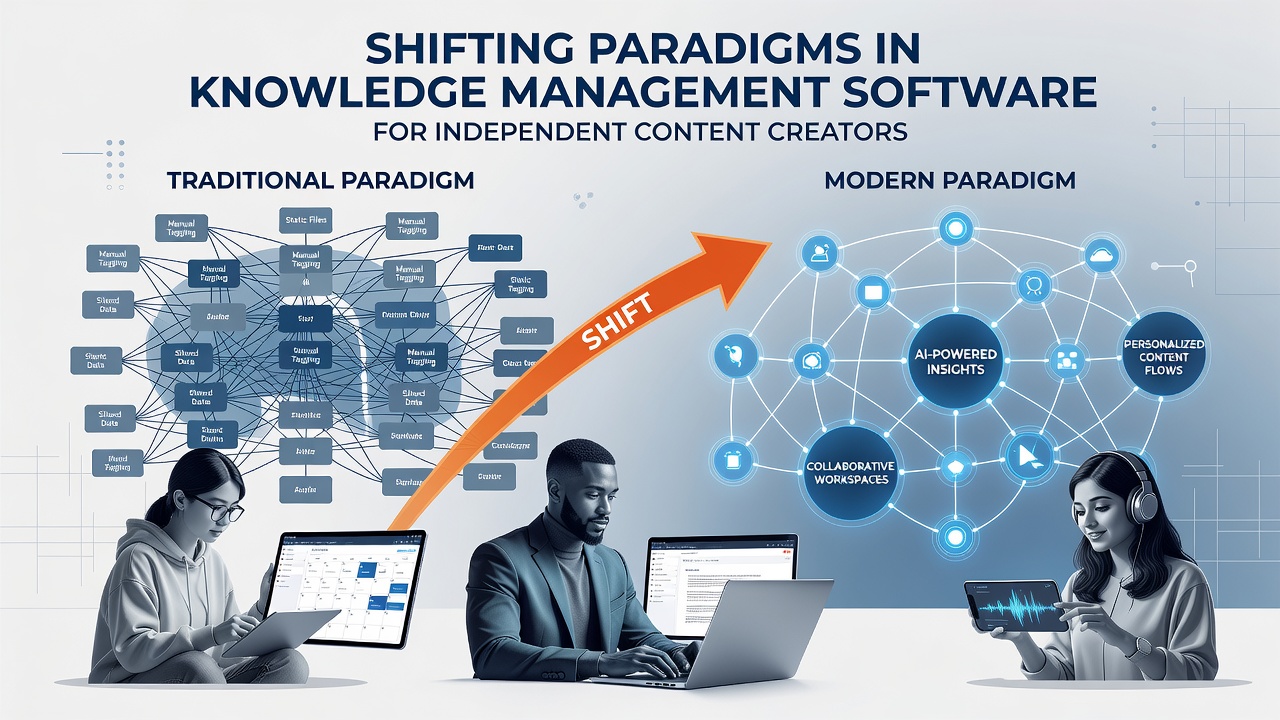
Knowledge management software for independent content creators has moved through distinct phases since the early 2000s, with developers adapting core functions to match changing production workflows and distribution channels. Early tools focused on basic file storage and simple tagging systems, yet by the mid-2010s platforms began incorporating real-time collaboration features that allowed solo operators to coordinate with freelancers across time zones without relying on email threads or shared drives. Data from industry reports indicate that adoption rates for these collaborative modules rose steadily as creators sought ways to maintain version histories across multiple drafts of articles, videos, and podcasts.
Transition from Local Storage to Distributed Systems
Independent creators once relied on desktop applications that kept all notes and media on single machines, which created bottlenecks when devices failed or when travel disrupted access. Cloud-based architectures replaced those models after 2018, when synchronization protocols improved enough to handle large media libraries without frequent conflicts. Researchers at several universities documented how these shifts reduced downtime for creators who publish daily, while also introducing new requirements for bandwidth and account security. In October 2026 several platforms released updated encryption standards that align with revised data-handling guidelines issued by regulatory bodies in multiple regions, allowing users to store sensitive interview transcripts with clearer audit trails.
Integration of Artificial Intelligence Features
Artificial intelligence modules entered knowledge management suites around 2022, first as optional add-ons for transcription and keyword extraction. Observers note that these functions expanded quickly because independent creators often manage dozens of projects simultaneously and need rapid ways to surface relevant notes from archives that span years. Studies conducted by academic teams in Europe and North America show measurable reductions in time spent on metadata entry when AI assists with tagging, although accuracy varies depending on the domain-specific vocabulary used in niche topics. The technology also supports automated summarization of long research documents, which helps creators who repurpose older material into new formats without rereading entire files each time.
Customization and Workflow Automation
Modern platforms now emphasize modular interfaces that let users build custom dashboards rather than accepting preset layouts. One case involved creators who combined task trackers with content calendars inside the same workspace, eliminating the need to export data between separate applications. Automation scripts handle routine actions such as routing approved drafts to publication queues or triggering backup copies after each major edit. Figures from trade associations reveal that creators who adopt these automations report fewer missed deadlines, although initial setup time remains a consideration for those new to the tools. And because many independent operators work without dedicated IT support, vendors have added visual scripting interfaces that reduce the coding knowledge required to activate these features.
Data Privacy and Cross-Border Considerations
Privacy regulations continue to shape software design choices, particularly for creators who collect audience data or maintain archives of unpublished work. Guidelines from the European Commission and equivalent bodies in Canada and Australia require explicit consent mechanisms and data portability options that developers have incorporated into recent releases. Independent creators operating across multiple jurisdictions often select platforms that offer region-specific storage locations to simplify compliance. Research published in 2025 highlighted how these privacy controls affect the speed of collaborative features, since additional verification steps sometimes delay real-time updates when teams span several countries.
Interoperability with External Platforms
Current knowledge management applications increasingly connect with social scheduling tools, analytics dashboards, and payment processors so that creators maintain a single source of truth for both content ideas and performance metrics. Industry organizations tracking digital media production note that these connections reduce context switching, which previously fragmented attention across browser tabs and separate logins. Yet the same reports caution that excessive integrations can create dependency risks if one service changes its API terms unexpectedly. Developers have responded by building export functions that preserve structured data in open formats, allowing migration when necessary.
Conclusion
The evolution of knowledge management software reflects ongoing adjustments to the practical needs of independent content creators who balance research, production, and distribution without large support teams. Continued refinement of synchronization, automation, and privacy controls suggests further changes ahead, driven by both technological advances and regulatory updates. Those who monitor adoption patterns across regions observe that flexibility remains the dominant factor in platform selection as creators adapt their workflows to new distribution channels and audience expectations.