Henrik Carter · 4 November 2026
Examining Automated Tagging Algorithms in Note Tools for Remote Freelance Research Teams
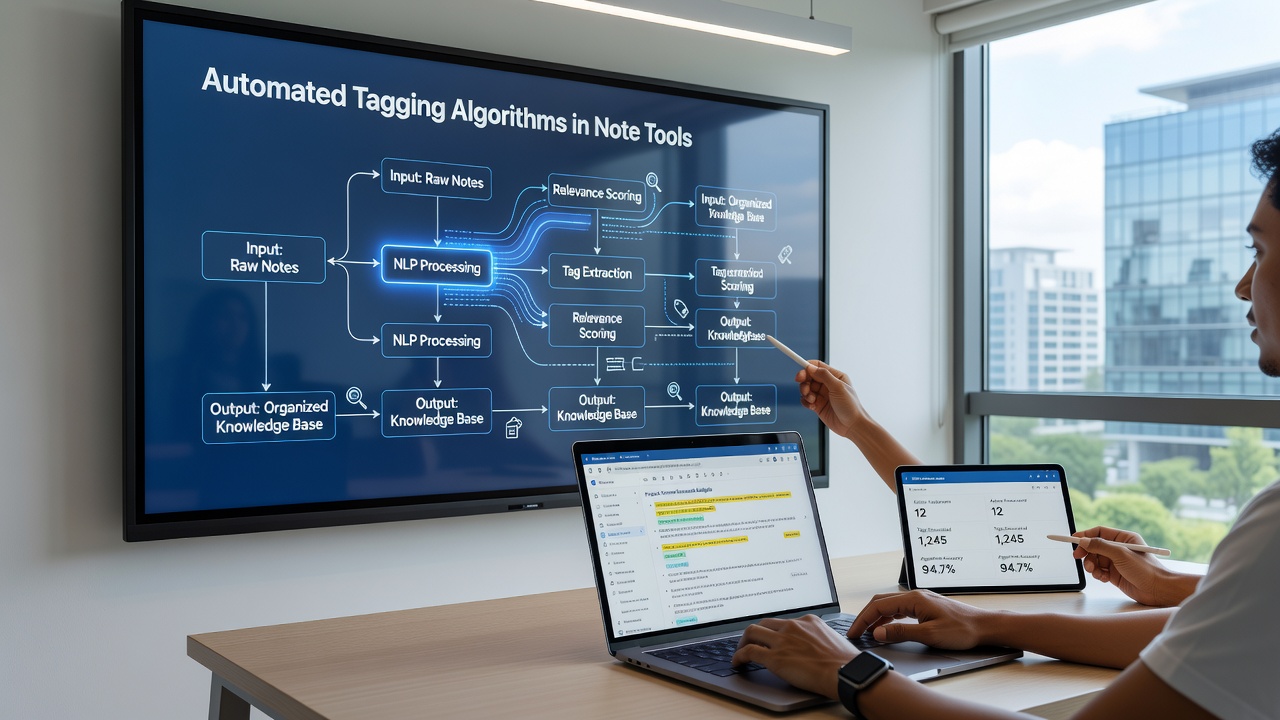
Remote freelance research teams rely on note-taking platforms that incorporate automated tagging algorithms to organize large volumes of data across distributed locations, and these systems use machine learning models to analyze text content, extract keywords, and assign relevant tags without manual input from users. Algorithms process natural language inputs through techniques such as named entity recognition and topic modeling, which enable consistent categorization even when team members work in different time zones or contribute at irregular hours.
Core Mechanisms Behind Automated Tagging
Automated tagging begins with preprocessing steps that clean and tokenize incoming notes, after which supervised learning models trained on labeled datasets predict categories based on patterns observed in previous entries. Unsupervised approaches like clustering group similar documents together before assigning tags, and hybrid methods combine both to improve accuracy over time as more data accumulates in the system. Research indicates that these processes reduce the time researchers spend on organization tasks by up to 40 percent according to internal platform metrics shared in industry reports.
Integration with external data sources allows algorithms to cross-reference notes against public databases or team-shared repositories, which strengthens tag relevance when freelancers handle specialized topics in fields such as market analysis or scientific literature reviews. Updates to these models often occur quarterly, with refinements drawn from user corrections that feed back into the training loops.
Applications for Distributed Research Groups
Freelance teams spread across regions benefit from tagging systems that maintain a unified knowledge base despite varying internet connections or device types, and features like real-time synchronization ensure tags update across all participants simultaneously. One study revealed that groups using such tools completed literature synthesis projects 25 percent faster than those relying on manual methods alone. Platforms designed for this use case frequently include permission controls that let project leads review or override automated tags before they propagate to the full team.
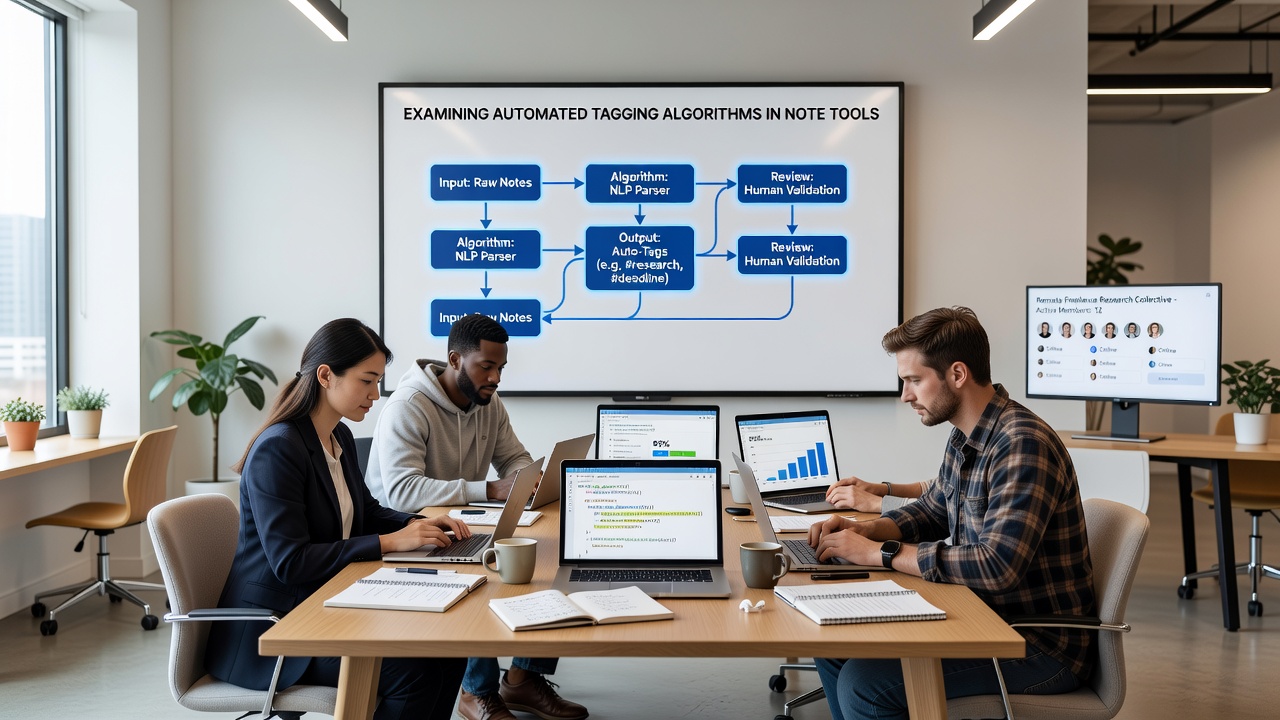
Case examples include teams working on global policy reports where algorithms flag recurring themes such as regulatory changes or economic indicators, allowing members in Europe and Asia to align their contributions without redundant discussions. Data from the National Institute of Standards and Technology highlights how standardized evaluation frameworks help developers measure tagging precision across diverse datasets used in freelance environments.
Performance Metrics and Limitations Observed
Accuracy rates for automated tagging hover between 75 and 92 percent depending on domain specificity, with higher performance in well-defined subjects like legal research compared to emerging interdisciplinary areas. Errors arise when context is ambiguous or when notes contain jargon not present in training data, prompting many platforms to offer easy override interfaces. Observers note that remote teams mitigate these issues through periodic audits where freelancers collectively refine tag taxonomies.
Scalability becomes relevant as team sizes grow beyond ten members, since larger datasets demand more computational resources for model retraining. Platforms address this through cloud-based processing that distributes workloads, yet latency can affect users in regions with limited bandwidth. Figures from the Australian Research Council indicate ongoing investments in edge computing solutions that bring tagging capabilities closer to end-user devices.
Developments Projected Through Late 2026
By November 2026, several note tool providers plan to incorporate multimodal tagging that analyzes images and embedded charts alongside text, expanding utility for research teams that incorporate visual data sources. Pilot programs already test federated learning approaches that preserve data privacy while improving model performance across international user bases. These advancements build on existing protocols for cross-platform compatibility, ensuring freelancers can switch between desktop and mobile interfaces without losing tag consistency.
Conclusion
Automated tagging algorithms continue to shape how remote freelance research teams structure their work, delivering measurable gains in organization speed while presenting ongoing challenges around accuracy and resource demands. As platforms evolve through 2026 and beyond, integration of refined machine learning techniques supports more reliable knowledge sharing among distributed contributors. Teams that adopt these tools alongside clear review processes position themselves to handle complex projects with greater efficiency across varied geographic and temporal conditions.